

Is there a missing piece in the health conversation?
For many of us, health only becomes a focus when it’s taken away.
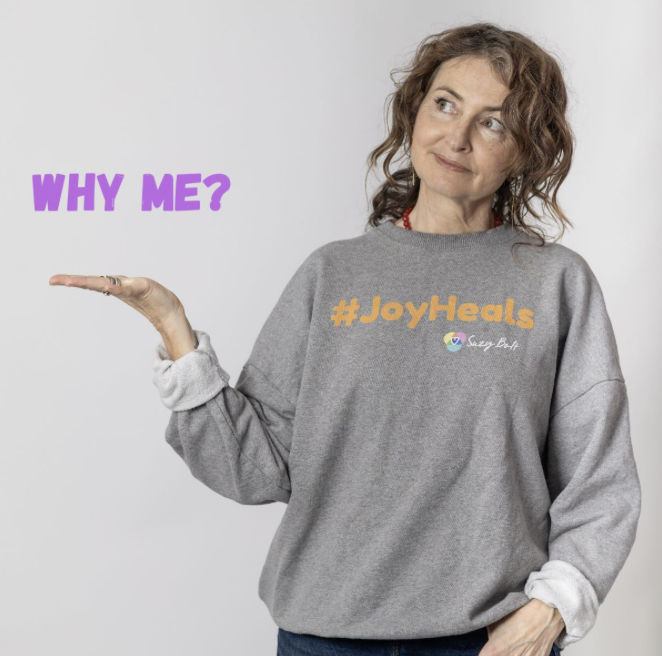
That’s when the appointments begin. The medications. The supplements. The endless search for answers. Sometimes these things help, and sometimes they don’t. We can find ourselves in a difficult in-between space, wondering, Why am I unwell? Why can’t anyone help me? Why me and not someone else?
Over the past few years, I’ve spent a lot of time reflecting on what actually underpins health…
Most of us in the West have been taught a fairly narrow view of health.
Healthy people are often portrayed as those who go to the gym, run regularly, lift weights, eat salad and count their grams of protein. Those things can absolutely support health, but do they tell the whole story? Is there more to health than simply what we do or don’t do?
For many of us, health only becomes a focus when it’s taken away.
That’s when the appointments begin. The medications. The supplements. The endless search for answers. Sometimes these things help, and sometimes they don’t. We can find ourselves in a difficult in-between space, wondering: Why am I unwell? Why can’t anyone help me? Why me and not someone else?
Over the past few years, I’ve spent a lot of time reflecting on what actually underpins health.
I love hearing stories that challenge our assumptions… like the 97-year-old smoker who lived a long, contented life and genuinely enjoyed smoking. It reminds us that health is more complex than a checklist of good or bad behaviours.
What I’ve learned, perhaps the long and difficult way, is that our experiences matter.
The emotions we feel – and the ones we suppress – can influence inflammation in the body and, ultimately, our long-term health.
What the ACE Study Taught Us
One of the most significant pieces of research in this area was the 1997 CDC-Kaiser Permanente Adverse Childhood Experiences (ACE) Study.
Researchers surveyed around 17,500 adults about their childhood experiences, exploring factors such as stress, abuse, neglect, violence, mental health challenges within the family and substance misuse.
The findings were striking. The higher a person’s ACE score, the greater their likelihood of developing both chronic and acute illness later in life.
In the original study, 61% of participants had experienced at least one adverse childhood experience, while 16% had experienced four or more. Those with higher ACE scores were found to have significantly increased risks of heart disease, cancer, diabetes, depression and other serious health conditions.
It’s a staggering connection.
The link between our experiences, emotional wellbeing and physical health is difficult to ignore. No amount of protein shakes can simply erase the impact of a high ACE score.
The Health Conversation We’re Still Not Having
Despite growing evidence, many healthcare conversations still focus on symptoms rather than root causes.
Our approach to health often begins once we’re already unwell, rather than helping people build resilience and wellbeing before illness takes hold.
I hope we’ll continue moving towards a broader understanding of health – one that includes not only what we eat and how we move, but also how we live, feel, connect and recover.
Why the Nervous System Matters
Much of this stress is carried within the nervous system.
At the end of every nerve cell sit mast cells (part of the body’s immune defence system), ready to respond when the brain signals danger.
When we’ve spent years living with stress, anxiety, fear, grief or overwhelm, the nervous system can remain on high alert. Over time, that constant state of activation can place a significant burden on the body.
This is why reducing our allostatic load (the accumulated “bucket of stress” we all carry) is so important. Healing old emotional wounds, creating safer environments, processing difficult experiences and learning to regulate the nervous system (how to experience/process stress and then come back to calm) can all help support better health.
The Challenge We Face
The challenge is that many of the things that support health are undervalued in modern society.
Rest is often seen as weakness. Slowing down can be mistaken for laziness. Ambition is celebrated, while taking time to care for ourselves is often treated as an inconvenience. Yet stress is one of the biggest influences on our health. What if we taught children about nervous system regulation alongside nutrition and exercise?
What if self-care was seen as a foundation of health rather than an optional extra and we learned how to actually cope with stress from an early age.
The difficulty is that conversations about stress, trauma and emotional wellbeing can feel uncomfortable.
They’re personal and often messy. It’s much cleaner to talk about the symptoms that arise down the road and not what might be happening for the person in their life. But if we truly understood how closely they’re linked to our health, perhaps we’d be more willing to have them.
What Supports My Health Now
These days, the practices that help me most are often the simplest:
- Noticing moments of joy
- Painting and engaging in activities unrelated to work
- Setting boundaries and saying no
- Spending time with people I can laugh and cry with
- Having honest conversations
- Getting outside in nature
- Spending time in silence
- Practising Yoga Nidra
- Gentle, restorative yoga
- Feeling connected to a community
- Reminding myself that I am doing enough
- Speaking kindly to myself
- Sharing my fears
- Caring for my body when it needs support
- Taking breaks throughout the day
- Creating a home that feels like a sanctuary
- Making choices that help me feel safe and relaxed
The list could go on, but I think you get the idea. It all contributes to a healthier nervous system.
A Question for You
Maybe it is time to reflect on what you are learning about your own health?
What helps you climb the ladders, and what sends you down the snakes?
We don’t always get to choose whether life hands us a snake or a ladder. But we do have some choice in how we respond.
Lately, I’ve been trying to follow a protocol of calm, kindness and self-compassion.
It’s certainly helping me.